News & Events

Save the Date: 2027 CIPSRT Conference
Save the Date: 2027 CIPSRT Conference
Regina, Saskatchewan | May 4–5, 2027
Mark your calendars – The 2027 CIPSRT Conference takes place in Regina!
The 2027 CIPSRT Conference will bring first responders, other public safety personnel, their families, researchers, clinicians, policymakers, organizational leaders, and students from across Canada together for two days of learning, connection, and collaboration focused on mental health and well-being in the public safety community.
Join us in the heart of the Canadian Prairies as we come together to share knowledge, exchange ideas, and strengthen the future of public safety mental health.
Save the date and stay tuned! A dedicated conference platform is launching soon and will be your go-to source for registration, presenter information, conference updates, and more.

Banner source: International Association for Suicide Prevention/ World Health Organization
Unmasking suicide’s taboo: World Suicide Prevention Day September 10
Many people might assume that the greatest threat facing a police officer comes from an armed or dangerous individual.
The reality is more complex and more concerning.
As Rob Farrer, President of the National Police Federation notes in this recent social media clip, one of the most significant threats to an officer’s well-being may come from impacts of mental health challenges associated with policing.
“They go into training healthier than the average individual, and not long into their career, they are a threat (to themselves) when it comes to suicide risk,” he says. “The RCMP’s multi-year longitudinal study lays out the proof very clearly.”
Ending stigma
Tuesday, September 10 is World Suicide Prevention Day. In Canada, the entire month of September has been dedicated to suicide awareness.
Every day, Canadians lose people they love to suicide. Among those deaths are public safety personnel—but we cannot yet say how many. What we can say is that the people who answer our calls, fight our fires, provide emergency medical care, maintain our borders, work in corrections, respond to disasters, and protect our communities are experiencing suicidal thoughts and behaviours at levels that demand our attention.
The World Health Organization estimates that globally, one person dies by suicide every forty seconds. In Canada, we lose approximately 10 people every day to suicide.
Here at CIPSRT, we acknowledge that repeated exposure to trauma can have lasting impacts for those tasked with keeping Canadians safe.
Ending stigma and openly talking about this once taboo subject starts with all of us. The call to action is simple but profound: let’s start the conversation.
Helping yourself or a loved one
Suicidal behaviour begins with thoughts or “ideation” and can proceed to planning and attempts.
When feelings become so intense and unmanageable that you begin isolating yourself from family and loved ones, it can be an early warning sign that shouldn’t be ignored.
For public safety personnel, having access to weapons, along with a greater prevalence of mental health challenges and a tendency to prioritize helping others before yourself, can add to the complexity.
CIPSRT’s message is one of compassion and urgency: you are never alone. CIPSRT offers free suicide resources to public safety personnel and their families, along with free mental health screening, and access to free online therapy through PSPNET.
If the situation is dire and immediate, the Government of Canada has a 9-8-8 crisis hotline with caring individuals ready to take your call.
If you’re struggling, the hardest step for most people is admitting vulnerability.
But real strength lies in the acknowledgement that you’re not OK. For National Police Federation President Rob Farrer, we can all play a role in reducing the threat of suicide among those who serve.
“Speak up. Seek help. And reach out to others. Too many lives have already been lost,” he says.
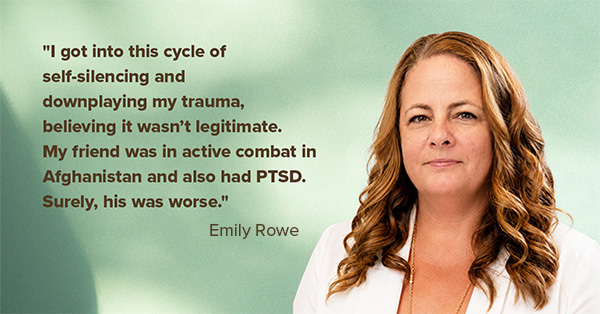
Holding space for public safety personnel who think their trauma doesn’t count
Have you ever dismissed your trauma with the assertion that “Someone else has it worse. Surely my experience doesn’t count?”
On September 22, CIPSRT presents a webinar featuring researcher Emily Rowe, and her theories on Imposter Trauma—the act of downplaying your trauma as illegitimate or insignificant in comparison to others.
For more than 12 years, Emily served her country with pride in the Canadian Armed Forces. She became a master corporal in the army and worked as a naval combat information operator in the navy.
But something happened—a tipping point too painful to casually share. She stuffed it down, telling herself ‘My trauma can’t be that bad.’”
She left the military in 2013 and found a new career with the Government of Canada, transferring her unique skill set into a public safety professional role in Ontario.
But eventually, Emily’s trauma started to weave its way into her new civilian life. She sought help with Veterans Affairs in 2022 and was diagnosed with PTSD but swore she would keep it to herself.
“There’s this expectation to be stoic and tough,” she tells CIPSRT. “Acknowledging that we’re struggling can feel especially risky.”
Emily got into a cycle of self-silencing and downplaying her trauma, believing it wasn’t legitimate. But things started to change when she took a leave and pursued a degree in public safety from Wilfred Laurier University.
Emily soon realized her PTSD was real. She has since taken her theories on Imposter Trauma to the national stage, earning rave reviews from her faculty, as well as those at the 2026 CIPSRT Conference plus a similar conference in the UK.
Emily is now in the process of getting the next steps of her research supported by the UK’s Centre of Excellence for Equity in Uniformed Public Services (CEEUPS).
You can register for CIPSRT’S Imposter Trauma webinar featuring Emily Rowe by clicking here. Learn why everyone’s trauma deserves empathy, care, and treatment.

Champions of Mental Health Are Back!
Do you know someone making a difference in mental health and well-being across Canada’s public safety community?
The CIPSRT Champions of Mental Health program is returning this fall, providing an opportunity to recognize public safety personnel who are helping create healthier, more supportive workplaces and communities.
More information on how to nominate a Champion will be shared on our website and social channels.
Know someone who deserves to be recognized? Start thinking about your nomination!
New Resources for you
New RCMP Veteran and Family resources from the Atlas Institute for Veterans and Families
A new suite of resources focused on the experiences of RCMP Veterans and Families is now available from the Atlas Institute for Veterans and Families. Co-created with former RCMP members, RCMP Family members and other community members, it includes:
- Practical guides on operational stress injury (OSI) for RCMP Veterans and Families: Information about what OSI is, how it can impact daily life and well-being, how to access supports and practical strategies for recovery and to build resilience
- Summary report on a RCMP mental health dialogue series: What RCMP Veteran and Family community members shared in a series of dialogue sessions on mental health, transition from service, access to care, identity, Family well-being and community connection
These resources aim to deepen understanding of the mental health needs and experiences of both RCMP Veterans and Family members, share what the community has said about how to strengthen well-being after service, and offer hope for recovery and renewed purpose.
Upcoming Event
Imposter Trauma: When your pain doesn’t feel bad enough

Date: Tuesday, September 22, 2026
Time: 1:00 pm – 2:00 pm EDT
Public safety professionals and veterans are often skilled at recognizing trauma in others but struggle to recognize it in themselves. Many dismiss their own experiences because they were not exposed to a single catastrophic event or because they believe someone else has had it worse.
This webinar introduces the proposed concept of Imposter Trauma, a framework that explores how workplace culture, leadership, and everyday interactions can influence whether people believe their own psychological distress is legitimate. Drawing on current research, lived experience, and examples from military and public safety settings, the session explores how trauma comparisons, self-silencing, and organizational culture can shape help-seeking and psychological well-being.
Participants will leave with practical ideas for recognizing these patterns, supporting others without comparison, and fostering workplace cultures where psychological injuries are acknowledged with dignity and people feel safe asking for help.
This event is presented in English with the option of French subtitles.

Book a Presentation for your Team
The CIPSRT and PSPNET teams are ready to support your upcoming events—virtually or in person! Whether you’re organizing a conference, expo, workshop, or team session, our experts deliver engaging, research-informed presentations tailored to public safety personnel.
Examples of our most in-demand presentation topics include:
- Supporting a Colleague – Building a supportive workplace culture.
- Self-Care – Maintaining wellness in high-stress environments.
- Sleep – Improve sleep and overall performance.
- Signs and Symptoms of PTSD – Supporting early intervention.
Presentation slots fill quickly—book now to secure your date.
If you’re interested in arranging a session, or if you know of an upcoming opportunity, please contact Communications.CIPSRT@uregina.ca as soon as possible.
June Outreach Highlights
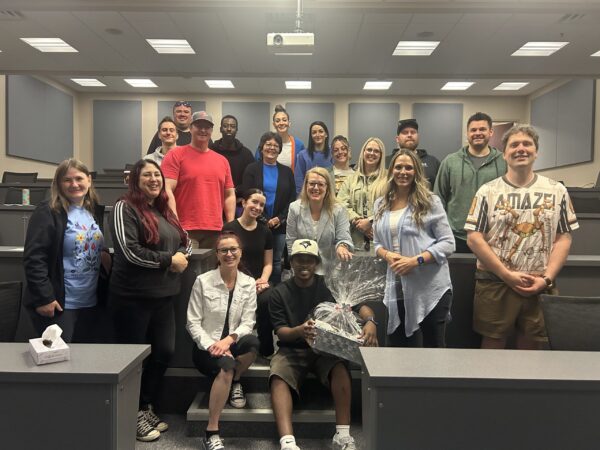
June was another busy month connecting with public safety personnel across Canada. CIPSRT provided mental health resource packages to 13 new recruits at Regina Fire and Protective Services, helping introduce future firefighters to free, evidence-based supports early in their careers.
CIPSRT also delivered a virtual session to the Calgary 9-1-1 Peer Support Team, highlighting how research can be translated into practical tools that support the mental health and wellbeing of public safety personnel.
In Regina, we presented Psychological Safety in the Workplace to staff at the Paul Dojack Youth Centre over two sessions. We explored ways organizations can foster healthier, more supportive workplaces through trust, open communication, and evidence-informed strategies.
(Photos from the two Paul Dojack sessions)
July Outreach Highlights
In July, CIPSRT continued to strengthen relationships with public safety organizations while expanding awareness of available mental health resources.
We returned to the RCMP Depot for another quarterly lunchtime outreach visit, connecting with cadets and distributing resource materials and promotional items.
Members of our staff were also invited to tour the Paul Dojack Youth Centre, providing valuable insight into the unique realities and workplace challenges experienced by youth corrections staff.
CIPSRT continued to support public safety personnel across the country by providing resource materials and promotional items for the USJE National Triennial Convention in Quebec City.
We also delivered mental health resource packages for 19 students in Suncrest College’s Professional Firefighters program, and promotional items for approximately 120 graduates at two Correctional Service Canada graduation ceremonies held at the National Training Academy in Kingston, Ontario.
August Outreach Highlights

In August, we focused on making CIPSRT resources more accessible in the communities where PSP live and work.
CIPSRT provided promotional materials to approximately 60 graduates at a Correctional Service Canada graduation held at the National Training Academy in Kingston, Ontario.
We also expanded our outreach to RCMP members across Saskatchewan by providing resource packages to RCMP F Division for distribution to all 82 RCMP detachments in the province.
In addition, CIPSRT provided resource materials and promotional items for the FireFit Canadian National Championships in Fredericton, New Brunswick, helping bring awareness of CIPSRT’s mental health resources to public safety personnel and their communities.
June’s PTSD Awareness Campaign reaches tens of thousands
CIPSRT’s June PTSD Awareness Campaign started as a whisper and grew to a rallying cry across the country by the end of the month.
A teal blue poster was launched at the beginning of June to show support for first responders and other public safety personnel living with posttraumatic stress injuries. Friends, family, and those in the public safety community were encouraged to print off the poster, sign their name, and upload a selfie, as seen by CIPSRT’s Knowledge Mobilization Lead, Dr. Kimberly Bitz, and other public safety personnel across the country.
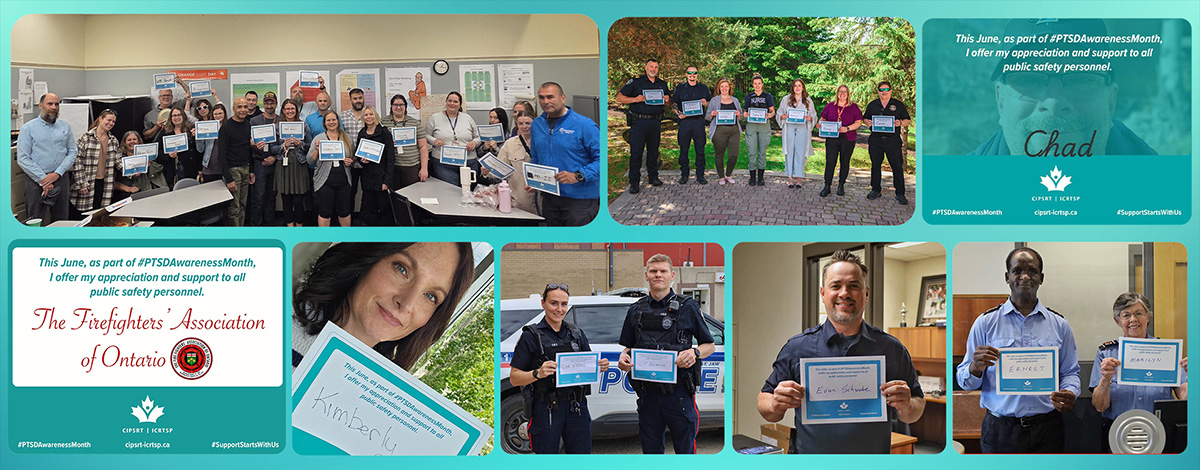
Clockwise left to right: USJE Local 50081; Kenora, Ontario Tribal Police; #seatoseaforPTSD marathoner Chad Kennedy; Moose Jaw, SK police officers; Dr. Kimberly Bitz from CIPSRT; and Firefighters’ Association of Ontario.
We didn’t know what to expect when it came to campaign participation, but we were really pleased with the results,” explains Mauricio Tathibana, CIPSRT’s web and marketing specialist.
“We received more than 42,400 views, which is well over double what our social media views were for the previous month,” he adds. “We had hundreds of people react to the poster from all over Canada, either by commenting on people’s photos, sharing the content, or uploading their own selfies.”
In addition to the teal poster, CIPSRT developed other engaging social content ranging from recognizing PTSD symptoms to finding treatment.
LinkedIn was also a popular site to raise PTSD awareness and tell heartfelt stories from the frontlines. This included unwavering support from former Public Safety Minister Ralph Goodale, as well as grassroots insights from former Prince Albert, SK firefighter Jeff Reeder, Alberta cross-Canada marathoner Chad Kennedy of #seatoseaforPTSD, and mental health advocate Christine Fader from Ontario. Nearly 15,000 people interacted with these articles and social posts.
“The people we interviewed weren’t afraid to be vulnerable in talking about overcoming mental health challenges or standing up for others, such as Christine Fader advocating for the mental health needs of her late husband while he was in care,” explains CIPSRT’s communications and marketing specialist Lynette Piper.
“Their advocacy demonstrates that kindness and understanding towards those challenged with PTSD can make a world of difference,” she adds.
CIPSRT’s campaign continued throughout the month of June, culminating in National PTSD Awareness Day June 27.
The most comprehensive Canadian research available indicates that up to 44 per cent of public safety personnel screen positive for symptoms consistent with one or more mental health disorders. This is compared to 10 to 12 per cent of the general population.
By sharing awareness, CIPSRT is helping to break stigma by letting first responders and other public safety personnel know they are not alone. The campaign reached tens of thousands of people and helped underscore the important work being done at CIPSRT.