Videos
Additional resources:
What we learned
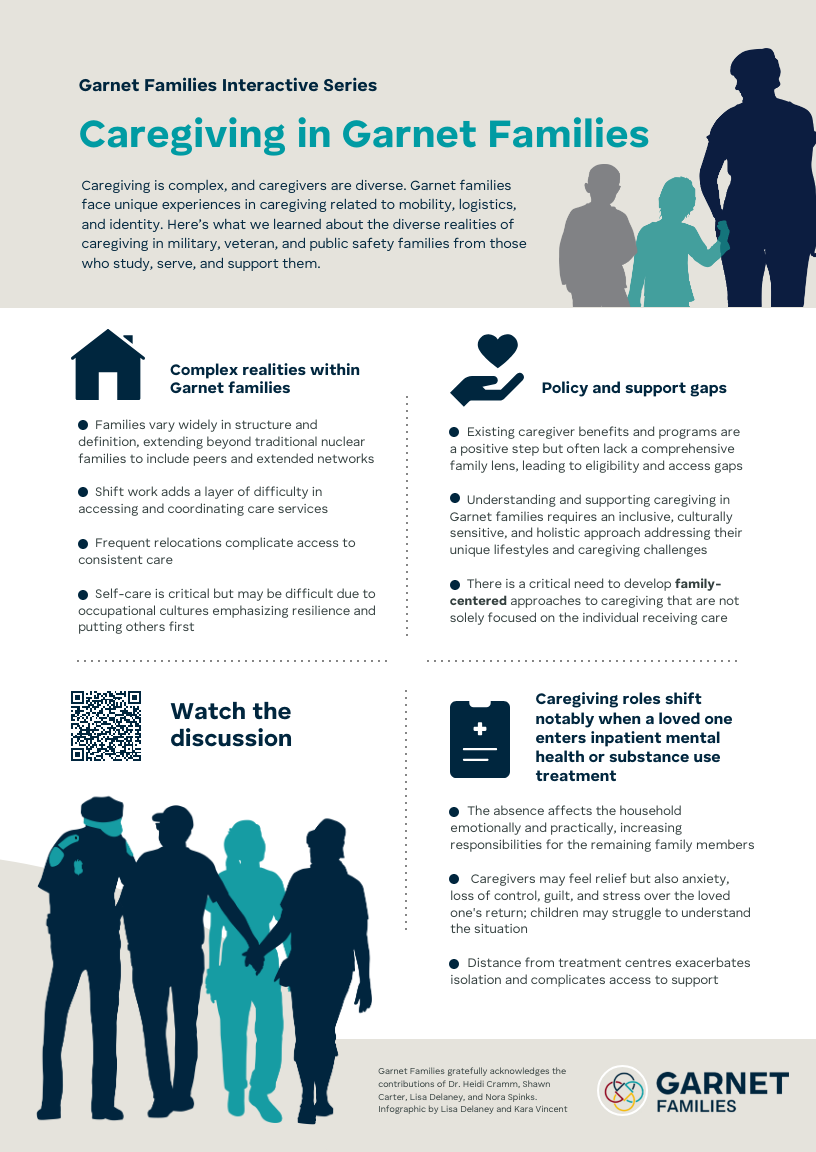
Caregiving is complex, and caregivers are diverse. Garnet families face unique experiences in caregiving related to mobility, logistics, and identity. Here’s what we learned about the diverse realities of caregiving in military, veteran, and public safety families from those who study, serve, and support them.
Complexities in Garnet families:
- Frequent relocations complicate access to consistent care, especially for children with special needs.
- Shift work adds a layer of difficulty in accessing and coordinating care services.
- Self-care is critical but may be difficult due to the culture emphasizing resilience and putting others first.
- Community awareness of Garnet family caregiving challenges is limited, often leading to misunderstandings and additional burdens.
Spotlight on Caregiving and Inpatient Treatment:
- Caregiving roles shift notably when a loved one enters inpatient mental health or substance use treatment. Caregivers may feel relief but also anxiety, loss of control, guilt, and stress over the loved one’s return.
- The absence affects the household emotionally and practically, increasing responsibilities for the remaining family members, often including managing children who struggle to understand the situation.
- Distance from treatment centres exacerbates isolation and complicates support access.
Policy and Support Gaps:
- Existing caregiver benefits and programs are positive steps but often lack a comprehensive family lens, leading to eligibility and access gaps.
- There is a critical need to develop family-centered approaches recognizing the whole caregiving ecosystem in Garnet families, rather than focusing solely on the individual receiving care.
Broader Reflections:
- Families vary widely in structure and definition, extending beyond traditional nuclear families to include peers and extended networks.
- Understanding and supporting caregiving in Garnet families requires an inclusive, culturally sensitive, and holistic approach that addresses both the intensity of caregiving and the unique lifestyle challenges they face.
- Enhancing community awareness, reducing stigma, and improving accessible coordinated services are essential for supporting caregiver well-being.
References
Martin, K., Vester, E., & Carter, S. (2025). A qualitative explanation of mechanisms of change for inpatient treatment for public safety personnel, military members, and veterans. Traumatology. Advance online publication. https://doi.org/10.1037/trm0000617
About this discussion
We invite you to join Dr. Heidi Cramm, Nora Spinks, and Shawn Carter for a multidisciplinary panel discussion examining the diverse realities of caregiving in Garnet families (military, Veteran, and public safety families).
Caregiving today is complex, and caregivers are diverse. Serving military members, public safety personnel, Veterans and families may be caregivers, caring for a spouse, children, family member with special needs or physical or mental health conditions, an aging parent or a colleague. They may be a caregiver and a care receiver at the same time. Garnet families may have access to professional and paraprofessional care providers and peer support…or not. Often away from extended family, on multiple waiting lists for services (sometimes in more than one province), those providing and receiving care may feel isolated and alone. The panel will explore the costs and consequences of military, Veteran and public safety personnel caregiving from the perspectives of those who study, serve, and support them.
We would like to acknowledge the support of the Social Sciences and Humanities Research Council (SSHRC) Partnership Grant (What about the families? Strengthening a family’s research ecosystem for defence and public safety sectors) and the Medavie Foundation.
November 25, 2025.
Panelists
Shawn Carter, Executive Director at EHN Guardians Gateway (an inpatient treatment centre for military, veterans and first responders) with a career-long dedication and passion for supporting families in both clinical and leadership roles.
Nora Spinks, CEO of Work-Life Harmony, with extensive experience informing policies, driving innovation and building community capacity to enhance the wellbeing of military and Veteran families.
Heidi Cramm is Professor in the School of Rehabilitation at Queen’s University, and the Research Lead for Garnet Families.